
Introduction
Cannabis cultivation is both an art and a science, requiring careful attention to detail to ensure a successful harvest. One of the most crucial aspects of growing cannabis is the ability to distinguish between male and female plants. Identifying plant gender early can significantly impact the quality and yield of your crop. This guide will walk you through the steps to identify male and female cannabis plants, providing essential tips for novice and experienced growers alike.
Why Identifying Plant Gender is Important
Understanding the gender of your cannabis plants is vital for several reasons:
- Maximizing Yield: Female plants produce the buds that are harvested for their high cannabinoid content, while male plants are primarily used for breeding purposes.
- Preventing Pollination: If male plants are not removed in time, they can pollinate female plants, leading to seed production instead of high-quality, resinous buds.
- Breeding: Knowing the gender of your plants allows for intentional breeding to develop new strains.
When to Identify Plant Gender
– Vegetative vs. Flowering Stage
Cannabis plants typically reveal their gender during the pre-flowering stage, which occurs about four to six weeks into the vegetative stage. This period is crucial for early identification and management.
Physical Characteristics of Male and Female Plants
1. Male Cannabis Plants
– Appearance of Male Pre-Flowers
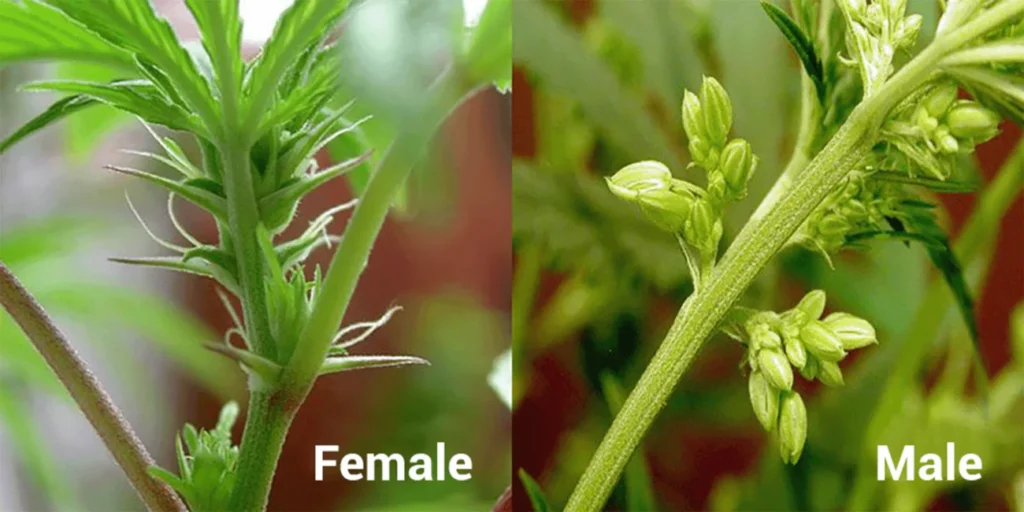
Male plants tend to be taller and less bushy compared to females. They develop pollen sacs, which look like small balls or clusters of balls, at the nodes (where leaves and branches meet the stem).
– Structure and Growth
- Taller Stature: Male plants often grow taller and have fewer leaves.
- Sparse Foliage: They are less bushy, making them easier to distinguish once pre-flowers appear.
2. Female Cannabis Plants
– Appearance of Female Pre-Flowers
Female plants develop small, white, hair-like structures called pistils at the nodes. These pistils will eventually grow into the resinous buds prized by growers.
– Structure and Growth
- Shorter, Bushier Growth: Female plants are typically shorter with a bushier appearance.
- Dense Foliage: They have more leaves and branches compared to male plants.
Step-by-Step Guide to Identifying Plant Gender
Step 1: Monitor the Nodes
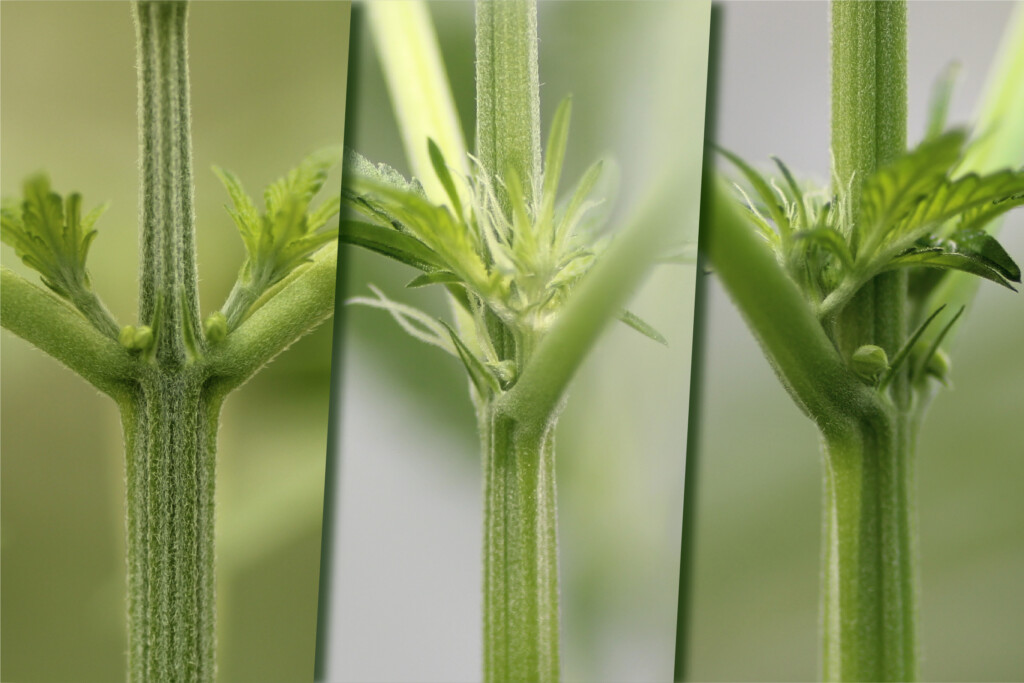
Begin examining the nodes of your plants regularly once they are about four weeks old. The nodes are the key areas where pre-flowers will first become visible.
Step 2: Look for Pre-Flowers
– Male Pre-Flowers
- Shape and Size: Male pre-flowers resemble small balls or sacs.
- Cluster Formation: These sacs often appear in clusters.
- Location: Found at the nodes, particularly near the top of the plant.
– Female Pre-Flowers
- Shape and Structure: Female pre-flowers look like tiny pairs of white hairs (pistils).
- Single Formation: They usually appear individually rather than in clusters.
- Location: Found at the nodes, especially on the upper branches.
Step 3: Use a Magnifying Glass
If you’re having trouble distinguishing the pre-flowers, use a magnifying glass. This can help you see the finer details and make an accurate identification.
What to Do Once You Identify the Gender
1. Isolate Male Plants
Once you have identified male plants, remove them from the growing area to prevent them from pollinating the females. This is crucial for preserving the quality of your harvest.
2. Care for Female Plants
Continue to care for your female plants, providing them with the optimal conditions for flowering and bud production. Ensure they receive the right amount of light, nutrients, and water.
3. Consider Hermaphrodites
– What are Hermaphrodites?
Hermaphroditic plants, or “hermies,” contain both male and female reproductive organs. They can self-pollinate and produce seeds, which is usually undesirable for growers focused on bud production.
– Identifying Hermaphrodites
- Mixed Traits: Look for plants that show both pistils and pollen sacs.
- Stress Factors: Stress conditions, such as light leaks or nutrient deficiencies, can cause plants to become hermaphroditic.
4. Managing Hermaphrodites
If you spot hermaphroditic traits, it’s best to remove these plants to avoid seed production and ensure the quality of your remaining crop.
Tips for Successful Identification
Action and better management of your crop.
1. Start Early
Begin monitoring your plants for gender indicators as early as possible. Early detection allows for timely action and better management of your crop.
2. Keep Records
Maintain a journal or digital log of your plants’ growth stages and any observations you make. This will help you track their development and identify patterns.
3. Use Reliable Seeds
Opt for high-quality seeds from reputable sources. Feminized seeds can reduce the likelihood of male plants and make identification easier.
Common Misconceptions
Their pollen is necessary for creating new strains.
1. Male Plants are Useless
While male plants are not typically used for bud production, they play a crucial role in breeding programs.
2. Hermaphrodites Always Ruin Crops
Not all hermaphrodites will completely ruin a crop, but it’s best to manage them carefully to prevent unwanted seed production.
3. Feminized Seeds Guarantee 100% Female Plants
While feminized seeds significantly increase the likelihood of female plants, they are not a 100% guarantee. Always monitor your plants for any signs of male traits.
Advanced Identification Techniques
Allowing for more efficient management of your crop.
1. Genetic Testing
For those seeking absolute certainty in identifying plant gender, genetic testing offers a reliable solution. This method involves taking a small sample from the plant and sending it to a laboratory for analysis. Genetic testing can determine the sex of a plant long before physical signs appear, allowing for more efficient management of your crop.
2. Hormonal Sprays
Another advanced technique is the use of hormonal sprays, which can influence the sex expression of cannabis plants. These sprays, often containing silver thiosulfate or gibberellic acid, can be used to force female plants to produce male flowers, which is useful for breeding feminized seeds. However, this method requires careful handling and application to avoid unintended effects on your plants.
Common Challenges in Identifying Cannabis Gender
Regular monitoring and early detection are key to preventing this issue.
1. Late Identification
One of the most common challenges growers face is identifying plant gender too late. If male plants are not identified and removed promptly, they can pollinate female plants, leading to the production of seeds instead of high-quality buds. Regular monitoring and early detection are key to preventing this issue.
2. Misidentification
Misidentifying the gender of your cannabis plants can also pose significant challenges. Novice growers, in particular, may confuse male pre-flowers with female pre-flowers or fail to recognize hermaphroditic traits. Using tools like magnifying glasses and seeking advice from experienced growers can help minimize the risk of misidentification.
3. Environmental Stress
Environmental factors such as light stress, nutrient imbalances, and physical damage can cause plants to exhibit unusual growth patterns, complicating gender identification. Ensuring optimal growing conditions is crucial for accurate identification and the overall health of your plants.
Practical Tips for Growers
Signs of male or hermaphroditic traits early, enabling prompt action.
1. Regular Inspections
Conduct regular inspections of your plants, especially during the pre-flowering stage. Frequent checks allow you to catch any signs of male or hermaphroditic traits early, enabling prompt action.
2. Clean and Organized Growing Area
Maintain a clean and organized growing area to minimize the risk of cross-pollination. Separate your plants based on their identified gender and ensure adequate spacing to prevent accidental pollen transfer.
3. Educate Yourself Continuously
The field of cannabis cultivation is constantly evolving, with new techniques and insights emerging regularly. Stay informed by reading the latest research, joining grower forums, and participating in cannabis cultivation communities. Continuous education will enhance your skills and help you stay ahead of potential challenges.
4. Use of Feminized Seeds
Investing in feminized seeds can greatly simplify the process of identifying plant gender. While not foolproof, feminized seeds have a high probability of producing female plants, reducing the time and effort required for gender identification.
Conclusion
Identifying male and female cannabis plants is a critical skill for any grower. By understanding the physical characteristics of each gender and monitoring your plants closely, you can ensure a high-quality, seed-free harvest. Whether you are a novice or an experienced cultivator, these techniques will help you manage your crop effectively and maximize your yield. Happy growing!